Interactive product experiences for companies whose products are too complex for static documentation and too valuable for generic visualization.
Specific services under this practice. Each is delivered by the same senior team, from first brief to handover.
Digital Twin engagements often start standalone because the pain point is specific and the budget is already allocated. They frequently expand into Platform Engineering when the twin needs to integrate with CRM, PLM, or service systems. They expand into Brand & Identity when the broader company is modernizing in parallel. And they expand into the AI Practice when the twin becomes the interface for an agent, as is increasingly the case in technical sales and field service.
OEMs and industrial manufacturers. Medical device companies. Heavy equipment makers. Specialized machinery producers. Any business where the product is the business and the complexity of that product is currently being communicated through documentation that no longer does the job.
The fidelity, the interaction model, and the compliance requirement change by sector. The underlying discipline does not.
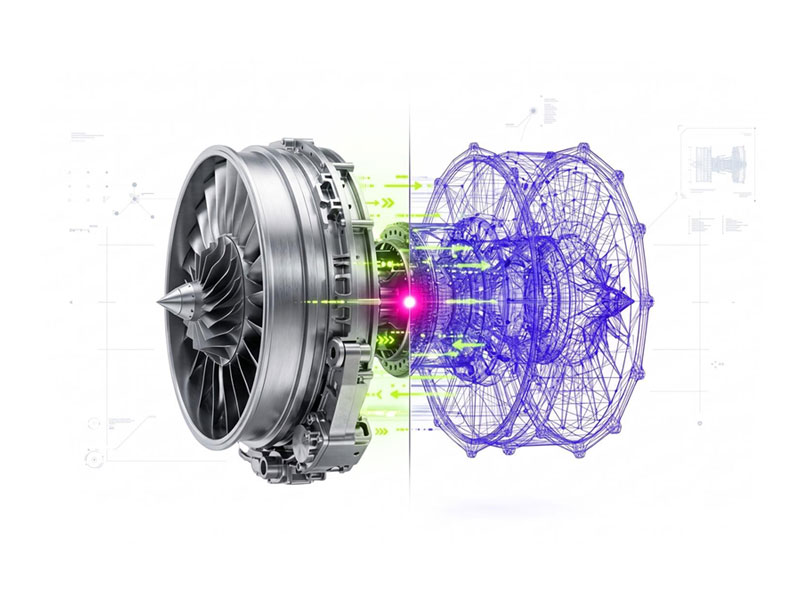
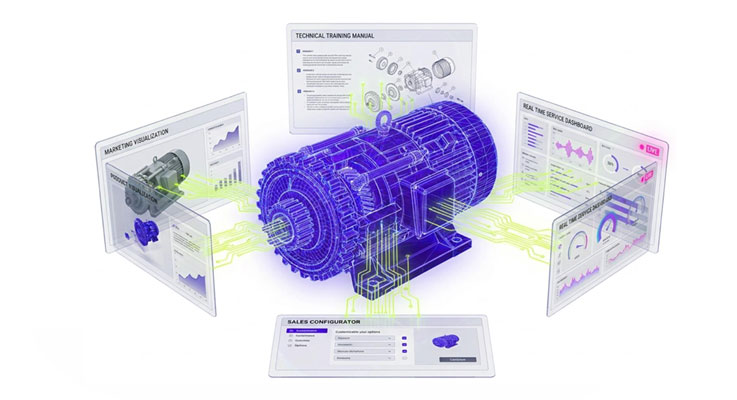
A digital twin is not a rendering, and it is not a viewer for looking at geometry. It is an interactive, data-linked, configuration-aware model of the specific product, responding to input: rotate a component, run a diagnostic sequence, change a configuration, and it returns behaviour tied to real specifications and service history, not a static illustration. Most 3D work stops at marketing. We build twins engineered to also carry sales, training, and service.
Intellectual property and confidentiality terms are set out in the proposal and the formal engagement agreement before any work begins. That agreement, not this page, is where ownership is decided and documented.
Engagements are scoped specifically for each client, so the investment depends on what we are actually building together. The first conversation is free and carries no commitment on either side, and gives you a real sense of shape and cost early.
Engagements are partner led. The senior person who scopes the work leads it end to end, matched to your specific product and problem. The twin itself starts from your engineering data, not approximations, which is what makes it accurate enough for training and service, not only presentable enough for marketing.
Yes. A digital twin is a 3D model plus the data architecture underneath it: specifications, configurations, service histories, pricing, inventory. Where you already run systems of record, we build the twin to connect to them rather than duplicate them. Digital Twin engagements frequently expand into a platform engineering phase specifically for this integration work.
Deployment and handover includes a defined plan for ongoing asset management, not as an afterthought. Every twin is architected to extend into the other three use cases from day one, so a product revision is an extension of the existing asset, not a rebuild.
We build the visualisation, training, and service tooling around a regulated product. We do not provide regulatory advice, clinical validation, or submission support. Any engagement involving a regulated product is scoped around your own compliance and regulatory function, not ours.
CAD files, engineering drawings, reference photography, or a short product video are each sufficient to start a conversation. A single-use-case web twin generally runs four to eight weeks. A full configurator, or a twin built into a training or service platform, runs eight to sixteen weeks.
Three numbers tend to make the case. Digital twin-based service tools typically cut time to resolution on complex faults by 25 to 40 percent. Between 20 and 35 percent of field service escalations involve a question the twin could have answered on the spot. Onboarding a new technician compresses meaningfully when they learn on the twin before they are ever dispatched to a live site. Where those numbers do not apply to your business, we will say so.
A short conversation with a senior partner is enough to scope what the right asset would look like and what building it would require.
Start a conversation