Answer engine citation work starts with a distinction: ranking in search results and being cited in an answer are different outcomes. An answer engine can only cite what it can extract and restate. That makes citation a structure problem before it is a copy problem. Better writing alone will not fix a page an engine cannot lift a claim from. Content architecture decides whether a claim can be lifted, and accurate schema helps machines confirm what the page describes.
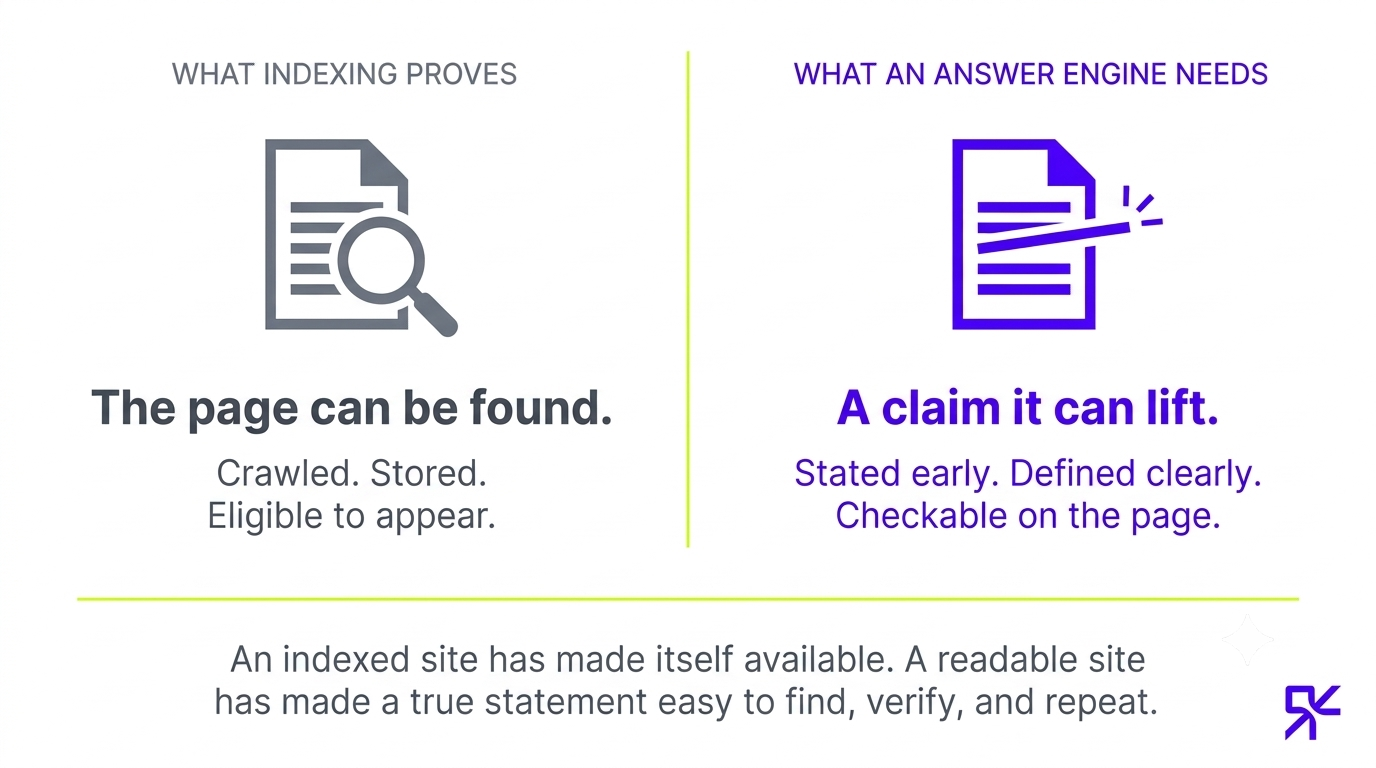
Answer engine optimisation (AEO) and generative engine optimisation (GEO) are terms for improving how often a brand's pages appear as sources in AI-generated answers. That work is not another copywriting pass. It is an operational process: audit which sources are cited and ignored, rebuild pages so claims can be extracted, then monitor changes using citation data. The earlier essay, Your site is indexed. That is not the same as being readable, explains what a page needs before an answer engine can use it. This piece focuses on the work that follows: how to find the gap, reshape the site, and tell whether the changes affect citations.

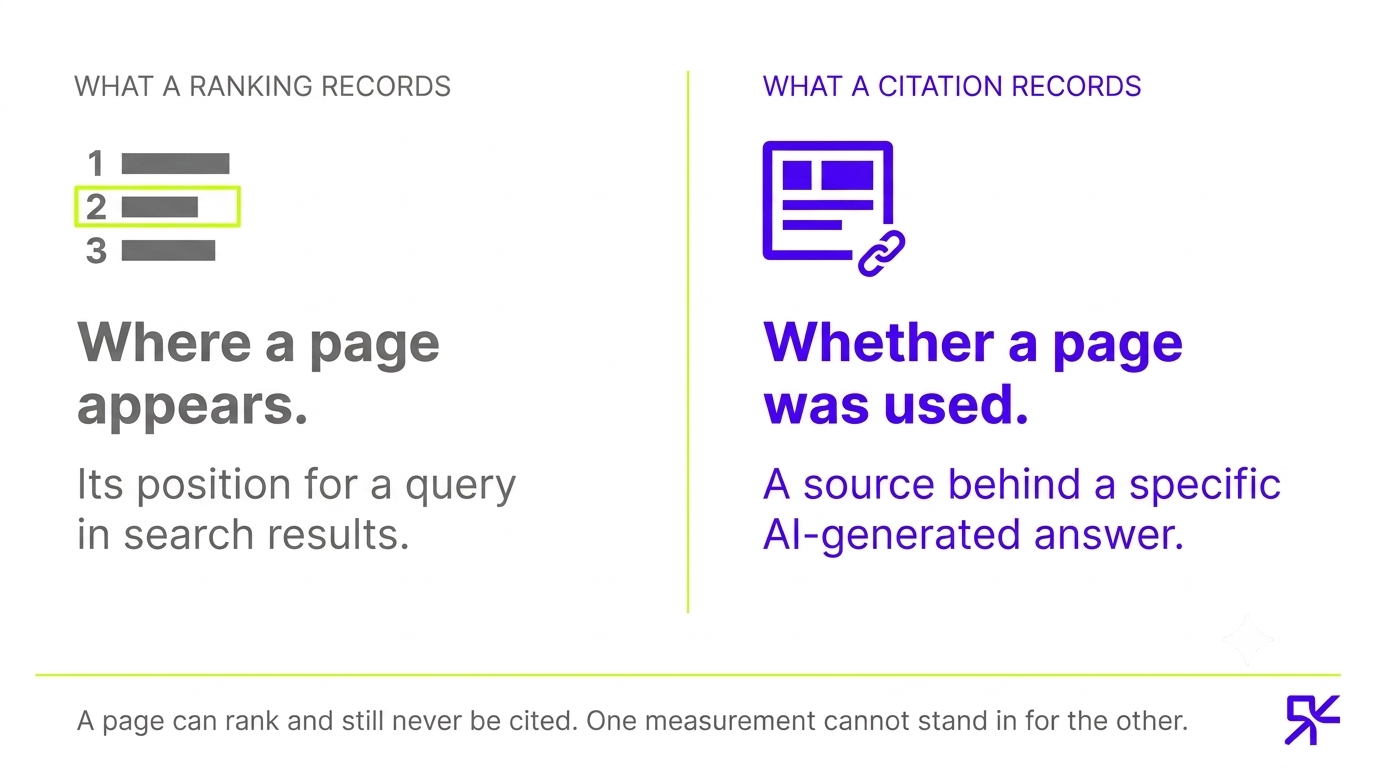
A ranking records where a page appears in a search result for a query. A citation records whether an answer engine used a page as a source for a particular answer. They are related, but one does not stand in for the other. A page can rank for a relevant query and still not be cited. It may describe the topic without making a clear, checkable claim that the answer engine can use. Conversely, an engine may cite a page that does not appear prominently in the search data the team usually tracks. The mechanisms differ, so the measurements must differ too.
Traffic will not fill the gap either. Pew Research Center found that in March 2025, people clicked a link inside a Google AI summary in just 1% of visits to pages that showed one. A citation can shape the answer a buyer reads without producing a visit.
That distinction changes the first question a team should ask. Not "How do we rewrite this page?" but "Which questions produce citations, which sources are cited, and where does our site fit?"
Start with the questions buyers actually ask. Do not begin with a list of target keywords or a set of prompts written to flatter the company. Review sales conversations, support requests, site search, and the questions that recur in proposals or product discussions. The purpose is to capture the wording and intent buyers bring to the decision.
Group related questions into clusters. A cluster might contain a broad question, a comparison, and a practical follow-up. Keep the prompt set specific enough that each question can be run again in the same form. If the wording shifts between checks, it becomes difficult to tell whether the answer changed or the test did.
Run the fixed prompts across the major answer engines relevant to the audience. For each response, log the date, prompt, engine, cited source URLs, and the part of the answer each source supports. Record when the company is mentioned without a citation as a separate observation. A mention and a source citation are not interchangeable.
Then compare those results with the site's own ranking data for the same questions and related searches. The comparison is not a contest between two dashboards. It is a way to see where the discovery paths diverge.
The audit should identify patterns such as:
The output is a gap list, not a rewrite brief. It shows which questions and claims need attention, and where. It does not yet tell a writer to add paragraphs, repeat a phrase, or publish another page. That decision comes after the team understands what the answer engine can and cannot use.
Extraction is the process of identifying a useful passage, understanding what it says, and using it in an answer. An answer engine needs a discrete, verifiable claim it can lift without losing the meaning. Most marketing pages never state one clearly.
A page may communicate its point through a headline, a product description, a diagram, and several paragraphs of contextual language. A person can combine those pieces. An answer engine may not reliably do so, especially when the key claim is implied, qualified much later, or expressed differently across the site.
Rebuilding for extraction begins with content architecture. Create one page for each question cluster when the cluster has a coherent answer. State that answer in the first two paragraphs, using direct language that a reader can verify. Then explain the conditions, evidence, and limits around it. Do not make a reader or a machine assemble the answer from several pages.
Define terms before relying on them. If a page uses a technical concept, explain what it means before using it to make a broader claim. Name the relevant organisation, product, service, or category consistently. A named entity is a specific person, organisation, product, or other thing that can be identified across sources. If the same organisation appears under different names or descriptions, its claims become harder to connect.
Agree on canonical claims: the preferred, consistent statements about what the organisation does, what a product is, and who it serves. Use those claims across the website and other company-controlled surfaces. Consistency does not mean copying identical paragraphs everywhere. It means avoiding contradictions about the facts that define the organisation and its offer.
Structured data adds a machine-readable description of visible page content. Use the appropriate Organization and Service schema, and ensure the marked-up facts match what a reader can see on the page. Schema is not a hidden place to make claims or a guarantee of citation. It gives machines a clearer account of which organisation or service a page describes.
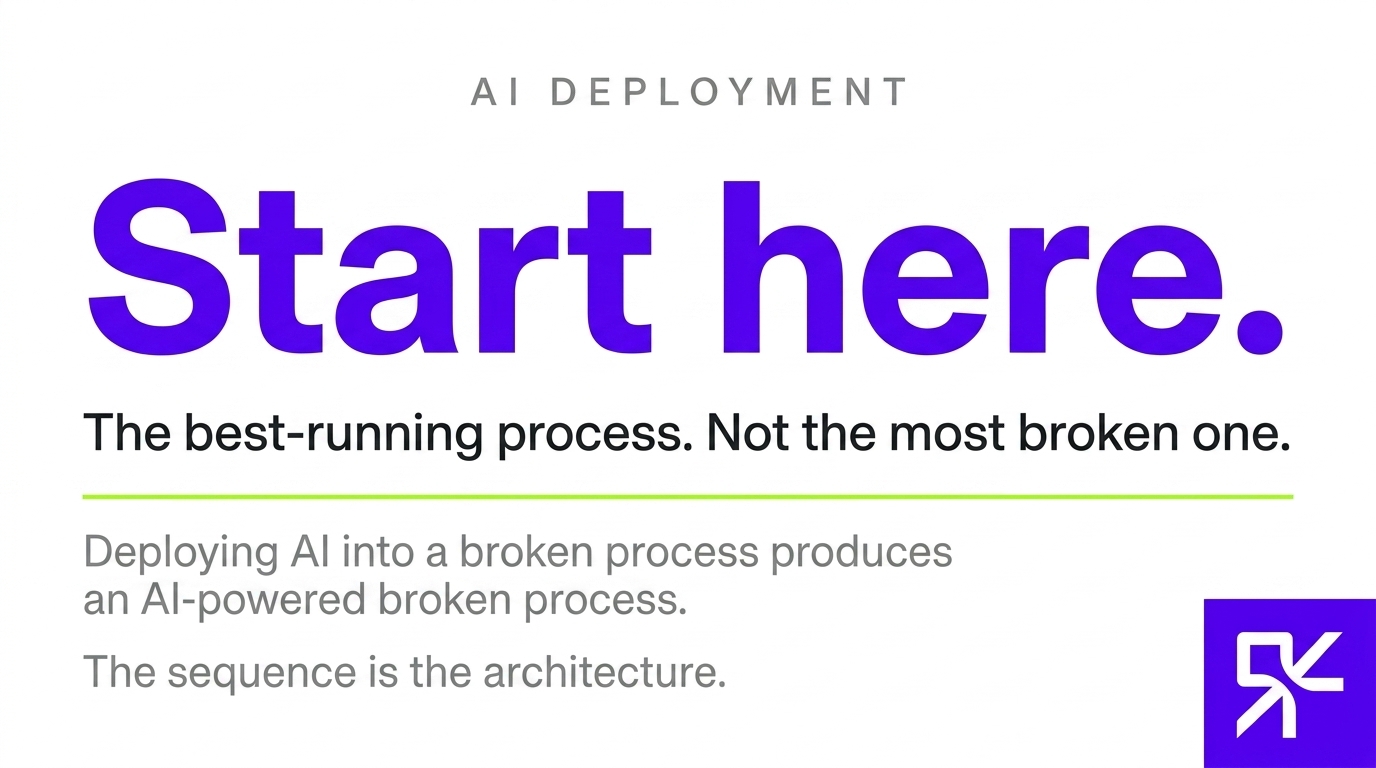
The sequence matters. First, decide what the page answers. Then establish the claim, define its terms, and make the relevant entities consistent. After that, apply schema that reflects the visible content. Adding structured data to an unclear page only describes the ambiguity more formally.
The AI Practice connects technical implementation with content structure. The work is not to make prose sound more persuasive. It is to give each important claim a stable home, a clear relationship to the organisation, and enough context to be checked.
A rebuilt page is not evidence of a citation change. The evidence comes from repeating the audit against the same prompt set and recording what the answer engines cite over time. Keep a citation log, a fixed prompt set, and a sampling cadence. Record the prompt-set version, the engine, the answer date, the cited URLs, and whether the cited passage supports the claim. Preserve the results from each run rather than replacing old entries with the latest response. That history helps the team distinguish a lasting pattern from a single answer.
Being cited is unstable. The same prompt can return different sources next month. Engines change, answers vary, and a page's position in search results does not explain every citation. A ranking report cannot measure this outcome.
Some first-party data now exists. In February 2026, Microsoft released an AI Performance report in Bing Webmaster Tools, in public preview, showing how often a site's content is cited in Copilot and Bing's AI answers and which URLs are referenced. It covers one platform, not all of them, but it is a useful check against your own prompt log.
Use share of citations in the prompt set as the core measure, not position. In practice, that means tracking the proportion of citations across the defined prompts and engines that point to the organisation's pages. Keep the prompt set and sampling method consistent between checks. If either changes, record the change so that a new result is not mistaken for movement in citation share.

Read the log at the level of question clusters as well as across the full set. A total can hide useful differences: a page may become a source for one buyer question while disappearing from another. Look at which URLs are cited, which claims they support, and whether the answer represents the organisation accurately. Then compare those shifts with page changes and the original gap list.
Monitoring is not a promise of stable visibility. It is a way to see whether the site is becoming a more usable source, where its coverage remains weak, and what changed between observations. The AI Practice treats that measurement as part of the work, not as a report added after publication.
Better writing still matters. But the teams that win this publish in a shape a machine can lift, and that shape is decided long before anyone sits down to write.
Citara Labs · AI Practice · citaralabs.com/thinking · Better made.