Author: Samar Patel
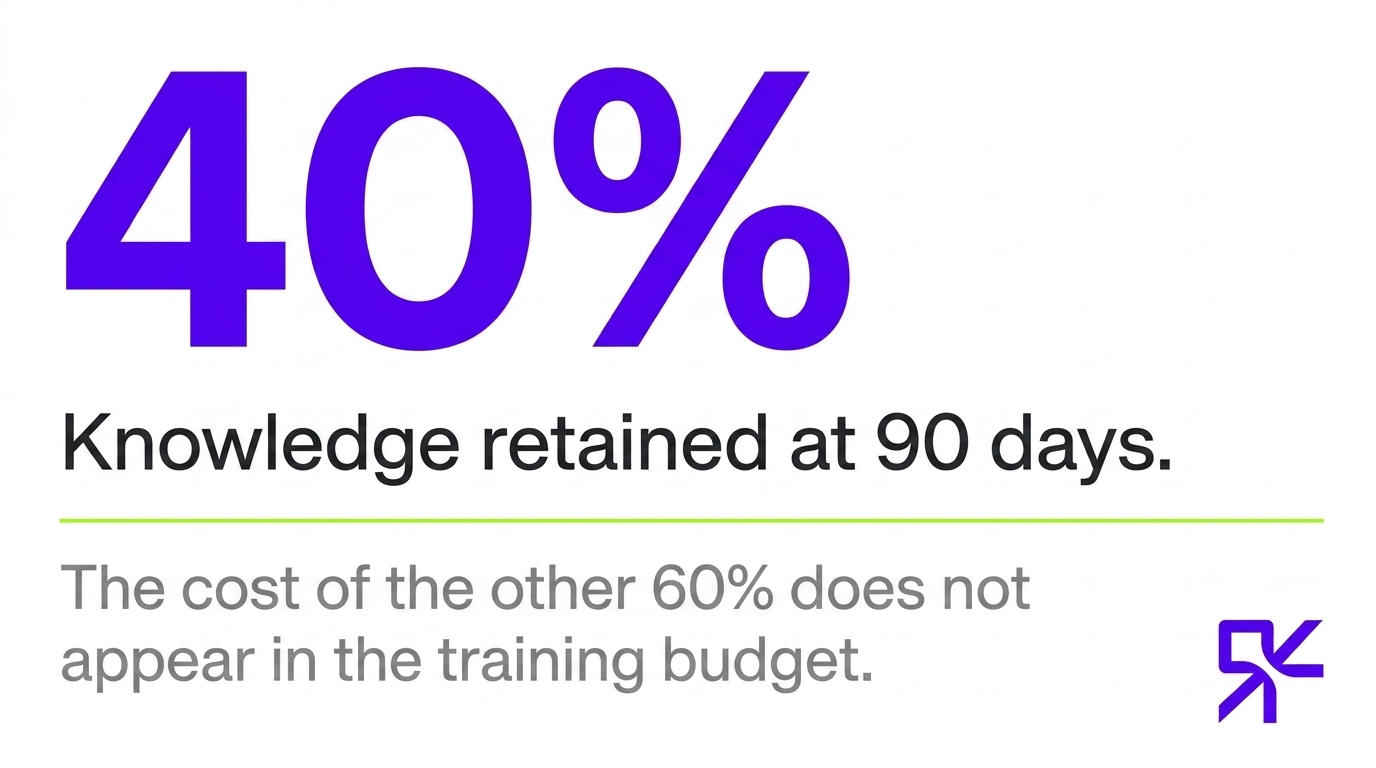
Ninety days after completing a field technician training programme, the average knowledge retention rate is approximately forty percent. This figure is not specific to one industry or one company. It is the consistent finding across adult learning research on procedural and technical skill retention when the training environment is separated from the work environment and the interval between training and application is measured in weeks rather than days.
Most field technician training programmes in complex product categories are designed in ways that produce exactly this result. The training happens at a facility that is not the work environment. The equipment used in training is a generic version of the product, not the specific variant the technician will encounter in the field. The procedures practised in training are the standard procedures, not the modified procedures that apply to the specific configuration at the specific site. And the interval between training and first deployment is often three to six weeks, during which the procedural detail learned in the facility has already begun to fade.
The training programme that costs $12,000 per technician to deliver produces a technician who retains forty percent of what was taught by the time they reach their first site. The remaining sixty percent is recovered through on-the-job experience, escalation calls to senior engineers, and the accumulated institutional knowledge of the service team around them. All of which cost money that does not appear in the training budget.

The cost of training a field technician on a complex product is almost always underestimated, because the estimate usually includes only the direct costs: the training facility, the instructor time, and the travel and accommodation for the technician. The full cost includes those items and several others that are rarely attributed to the training function. The cost of the cohort model means new hires typically wait three to six months for their first formal training. During that period they are covering existing tickets at reduced capacity. The cost of that reduced capacity is a training cost that does not appear on the training budget.
Between $8,000 and $15,000 per head is a typical range for complex equipment when all components are counted: flights, accommodation, per diem, the cost of the training facility, the instructor, and the service capacity lost during the period the technician is away from the field. These costs are accepted as necessary because they are the costs of the only training model that has been available.
Complex products are typically sold in multiple variants. A medical device manufacturer may have twelve distinct configurations of a single product line, each with different components, different procedural requirements, and different fault patterns. The training programme that runs quarterly at the central facility can realistically cover three to four of those variants in the time available. In practice, this means a technician certified on variants one through four may be dispatched to a site with variant seven within their first month in the field. They have the foundational knowledge from the training programme. They do not have the specific procedural knowledge for the variant in front of them.
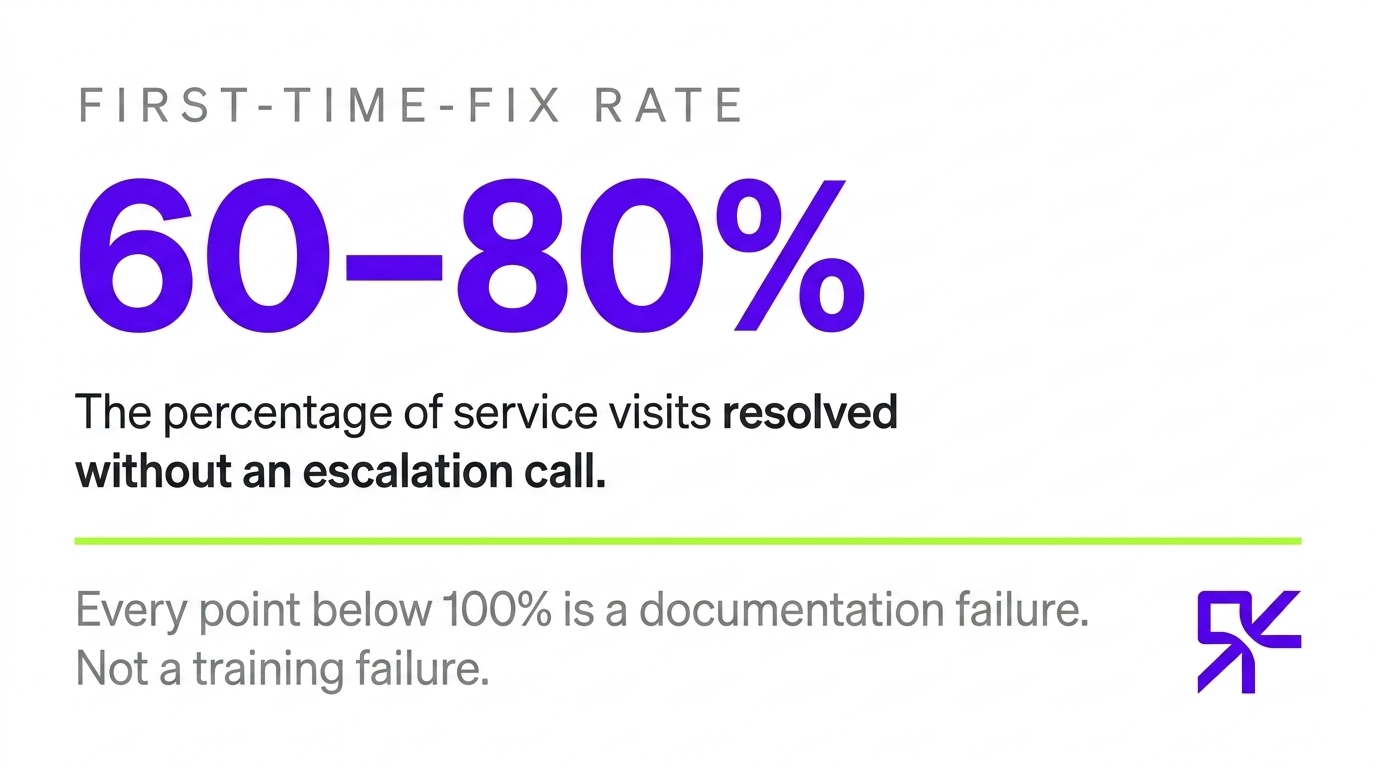
The gap is filled by the escalation line, by a colleague who has worked on that variant before, or by the technician's own improvisation. The coverage gap is a structural consequence of delivering training on physical equipment at a central facility on a quarterly schedule. The constraints of that model limit what can be covered in the time available.

The forty percent retention figure is not an inevitable outcome of technical training. It is the outcome of training delivered in a way that produces low retention. Retention research on procedural and technical skills is consistent on two variables. The first is the interval between training and application. Skills practised close to the point of application are retained at significantly higher rates than skills learned in a concentrated session and not applied for several weeks. The second is the fidelity of the training environment to the work environment. Skills developed in an environment that closely resembles the actual work context are transferred more effectively than skills developed in a generic training environment.
The field technician training programme that produces forty percent retention scores poorly on both variables. The training happens weeks before the first deployment. It happens on generic equipment at a central facility, not on the specific variant at the specific site.
A digital twin built for field technician training is an accurate, interactive simulation of the product that a technician can access from their first week, on any device, without travelling to a training facility. The simulation covers every variant in the product portfolio. A technician who will be dispatched to a site with variant seven can train on variant seven before they arrive, regardless of whether that variant was included in their original certification programme.
The simulation covers the specific modifications and configurations that the product takes in real installations. A technician preparing for a service visit to a specific site can access the twin for that unit, review the installation record, and practise the procedures relevant to that specific configuration before they arrive on site. The interval between training and application closes to days or hours rather than weeks. A technician can refresh their knowledge of a specific procedure on the morning of the service visit, using the twin for the specific unit they are about to work on.

The digital twin built for training is the same underlying asset as the twin used in the field service tool. A technician who trained on the twin arrives at the service site already familiar with the interface and the model they will use to diagnose the fault. The procedures practised in training are the procedures available in the guided diagnostic on site. The configurations explored in simulation are the configurations described in the unit-specific record.
The organisation that builds the training twin separately from the service twin creates a gap between the training environment and the work environment that the technician must bridge on their first service visit. The organisation that builds them as the same underlying asset removes that gap entirely. This is the connection that changes the retention figure. Training on the same system the technician will use in the field produces higher retention not primarily because the simulation is better, but because the training environment and the work environment are the same.
The training model that runs on a digital twin does not eliminate the training budget. It redirects it. The costs that reduce are the costs of the physical training model: facility, travel, accommodation, and the lost field time of technicians who are at the training centre rather than on site. The costs that remain are the costs of developing and maintaining the twin, which is shared across the training, service, sales, and marketing use cases. The training function is not paying for the entire twin. It is paying for its use case within a shared asset.
The technician who completes training on the twin arrives at their first site with current knowledge of the specific variant they will encounter, practised on the same system they will use on site, developed close to the moment they will need it. The knowledge retention rate that results is not forty percent. It is the rate produced by a training environment that matches the work environment, delivered at the interval that produces retention. That is a different number. And it is a different technician standing in front of the machine.